Product Overview
The CL-N234 is a 234Ah NMC prismatic cell in a hard aluminium case. It is built for pack assemblers, ESS integrators and industrial power designers who would otherwise need a long string of small cylinders to reach the same stored energy — fewer welds, fewer interconnects and fewer joints that can pull a module down. One high-capacity NMC battery cell carries the capacity; your frame, busbars and BMS turn it into a pack.
Two kinds of project use it. Vehicle packs — low-speed EVs, conversions, two- and three-wheelers, mobile machinery — want the energy density and the continuous discharge. Stationary storage — off-grid solar, wind and emergency backup — wants a cell that sits at partial state of charge for weeks without drifting. In both cases each NMC cell is logged, matched, clamped into a carrier, busbar-connected and handed to a protection board that the pack designer specifies.
This is a component, not a finished battery. No BMS, no enclosure and no charger are included; the thermal path, the protection circuit and the housing stay in your design. What you do get is the part that is hardest to verify later: batch data, storage history and the documents that travel with the goods — the side of buying from an established NMC prismatic cell supplier that only shows up when a string has to be traced back two years down the line.
Specifications
Every battery ships with UN38.3, CE, FCC, RoHS, IEC62133 and UL certification, and further regional certifications can be arranged where a market requires them. Full documentation is available on request, including the MSDS, UN38.3 test report, cargo transport assessment report and the relevant certification files, so freight forwarders and customs brokers have what they need. NOGIPower focuses on high-performance lithium battery solutions and works in long-term, in-depth cooperation with its customers.
| Battery Model |
CL-N234 |
| Battery Type |
NMC battery cell |
| Nominal Voltage |
3.7V |
| Nominal Capacity |
234Ah |
| Working Voltage |
2.7V-4.2V |
| Max Charge Current |
1C |
| Max Discharge Current |
3C |
| Peak Discharge Current |
5C |
| Internal Resistance |
≤0.3 mΩ |
| Charge Temperature |
0-45 ℃ |
| Discharge Temperature |
-20-60 ℃ |
| Storage Temperature |
-20-45 ℃ |
| Cycle Life |
≥2500 cycles |
| Battery Size |
22067103 mm |
| Battery Weight |
3.45 kg |
| Warranty |
2 Years |
NMC Prismatic Cell Advantages
More energy in less space
NMC chemistry is chosen when the pack has to be light and compact for the energy it carries. It holds more usable energy per kilogram and per litre than LFP, which is why vehicle and mobile-equipment designs keep returning to it: every kilogram saved comes back as range or payload.
Fewer parts to build and to fail
A prismatic lithium ion battery packs that capacity into a rectangular hard case that stacks without wasted corner space. One block replaces what would take many cylindrical cells, and every cell removed takes a weld, a busbar joint, a voltage tap and an assembly step with it. Fewer items to match also makes consistency across a module easier to hold.
A case that does structural work
The aluminium shell is not just packaging. It gives the electrode stack a flat, repeatable face for compression plates and cooling plates, keeps it under even pressure in service, and turns the module into a rigid block that survives transport and vibration better than a soft pouch. For an active chemistry like NMC, that controlled mechanical and thermal environment is what keeps performance predictable across the life of the pack.
Where it gives way
NMC is not the right answer for every project. It asks more of your thermal design than LFP does and it does not match LFP on cycle count, so where the priority is the longest possible service life at low stress per cell, an LFP cell is usually the better fit. It also pays to compare like with like when you read datasheets: cycle figures from different NMC battery manufacturers are normally quoted under standard laboratory charge and discharge at room temperature, so ask for the test conditions behind any number you are comparing against your own duty cycle.
Applications & Duty Cycles
- Low-speed EVs and conversions — one 234Ah block keeps the module count and the cable runs short, which matters when the pack has to fit an existing floor pan or battery tunnel.
- Builds that already name a cell — if your drawing specifies EVE prismatic cells or another 200Ah-class model, send it over and we will confirm whether this footprint and terminal layout can go into the same carrier.
- Two- and three-wheelers, e-bikes and drones — the format suits packs where weight and volume are tight and the duty cycle is short but sharp.
- Off-grid solar, wind and emergency backup — these sit at partial state of charge for long stretches, and this NMC battery cell holds its voltage quietly between cycles with low self-discharge.
- AGVs, floor scrubbers and small traction units — peak draws run well above cruise, and each NMC cell shares that burst across a short string instead of a wide parallel bank.
- Marine, RV and golf-cart packs — a sealed hard case is easier to fix into a compartment and to inspect later than a bank of small cylinders.
Pack Assembly Notes
- Size the string from the working window. Count cells against your nominal pack voltage, then check the top of charge against the charger, BMS and inverter cut-offs before you commit to a layout — a 3.7V nominal string lands at a different top-of-charge voltage than a 3.2V LFP string of the same length.
- Reserve a batch before you commit the build. Cells from established NMC battery manufacturers hold their spread better batch to batch, but a long production run still deserves one allocated batch and the capacity and internal-resistance records that came with it.
- Sort on arrival. Check open-circuit voltage and internal resistance at goods-in and group cells so every string sits inside a tight spread; even a healthy NMC cell drifts once it is paired with a tired one.
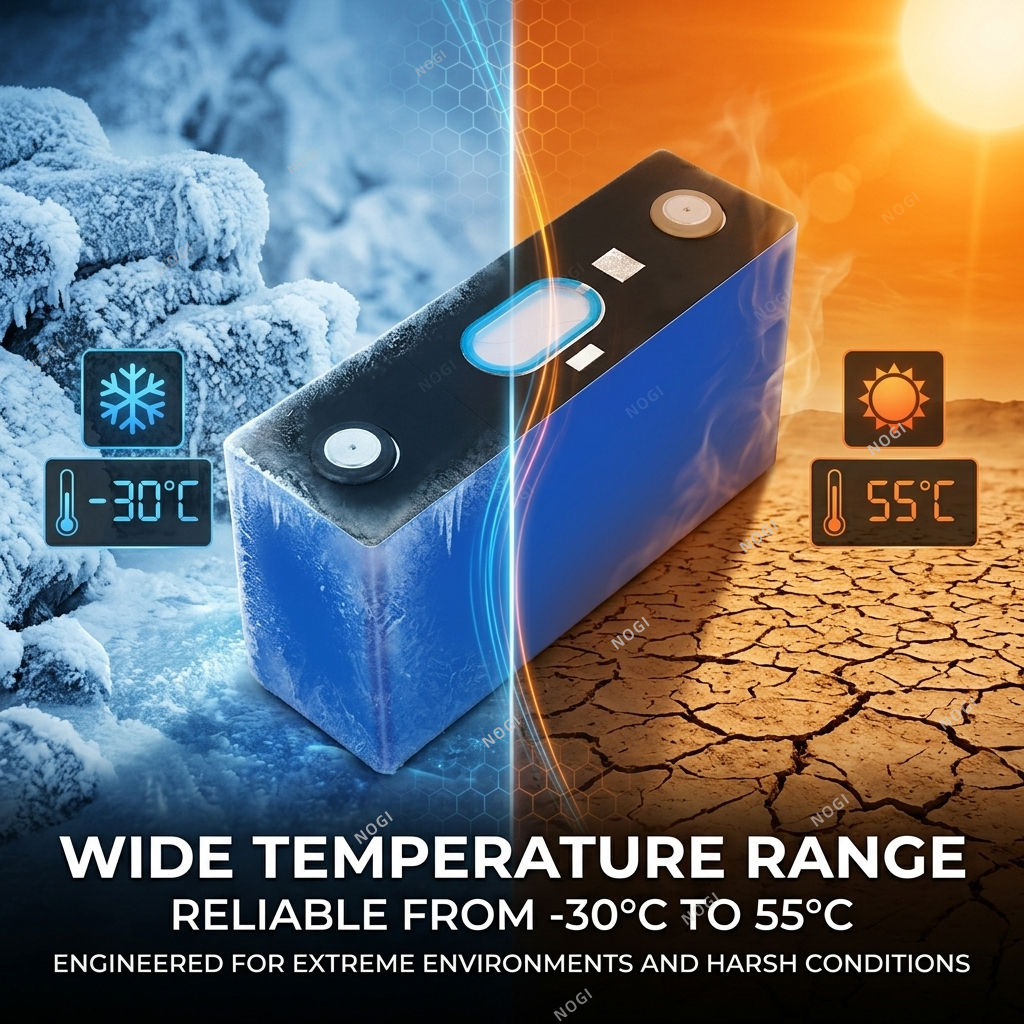
- Plan the thermal path around the charge window. The cell charges between 0 ℃ and 45 ℃ and discharges from -20 ℃ to 60 ℃, so a pack that must charge on a cold morning needs a heater pad or a charge inhibit from the BMS. A cooling plate under the flat face of the case works well for sustained high-rate discharge.
- Give the case mechanical support. Clamp it evenly, keep the vent clear, and never let the terminals carry the weight of a busbar or a cable loom.
- Ask for the paperwork early. Whoever you order from — us or another NMC prismatic cell supplier — request the UN38.3 report, the MSDS and the batch test data before the goods ship, then check the numbers against what is printed on the carton.
- Keep one model and one batch per string. A mixed string of this cell with older stock, or with EVE prismatic cells of nominally similar capacity, works until load arrives — then the weakest cell sets the limit for the whole series.
Certifications & Documents
| UN38.3 test report |
Cell-level transport test data required for air and sea freight |
| MSDS |
Safety data sheet for handling, storage and freight booking |
| Cargo transport assessment report |
Supporting document for lithium battery freight |
| IEC 62133 |
Cell safety standard for portable and industrial applications |
| CE / RoHS / FCC |
Market compliance files for the EU and US |
| UL |
Certification file where the destination market or project requires it |
| Batch test data |
Capacity and internal-resistance records per order on request |
| Regional files |
Additional certification as required by the destination market |
OEM & Project Support
- Cells, modules or finished packs — quote at whichever level the project needs: bare cells, cells built into modules with busbars and fixtures, or a complete pack with BMS and enclosure.
- Brand choice on the same build — our channel runs through CATL, CALB, EVE and Farasis. If your drawing names a model, we quote that model; if it is short, we show what the closest alternative from those NMC battery manufacturers would change in the pack.
- One thread from cell to pack — using a single NMC prismatic cell supplier for the cells, the module hardware and the pack assembly keeps the specification, the documents and the traceability on one record.
- OEM and ODM work — send the drawing, the target voltage and the enclosure; our engineers return a cell count, BMS selection and a bill of materials, and we can build prototype units for approval before a production run.
- Mixed and repeat orders ��� NMC prismatic, LFP prismatic, pouch and cylindrical cells can travel on one shipment when projects run in parallel, and repeat builds are quoted against the same cell so the specification does not drift.
Ordering & Delivery
- Tell us the build. Pack voltage, target capacity, enclosure size and any brand your drawing names — that is enough for us to quote. We answer as a lithium battery supplier that ships cells, modules and finished packs, so say which level you want.
- Quantities. There is no strict minimum order quantity on this model, and small sets can be arranged for testing — ask your sales contact about sample availability and pricing for the quantity you have in mind.
- Freight terms. FOB, CIF, DAP and DDP are available for most destinations, and door-to-door duty-paid delivery is the option most buyers choose. Send the port or warehouse address and we will confirm routing.
- Lead time and payment. Both depend on the batch we allocate and the destination, so confirm them with your sales contact before you fix the build schedule.
- Packing. Bare prismatic lithium ion battery cells travel as Class 9 dangerous goods in the manufacturer's inner cartons inside a UN-rated outer box, with terminals protected and labels applied to the carrier's requirement.
- After delivery. Check the shipment against the packing list before the cells go into stores, and keep the batch labels with the pack serials. If a cell underperforms later, the batch record is what a claim is settled on.
Storage & Handling
- Keep the cells in their original inner cartons on the pallet until the pack line is ready. The carton keeps terminals covered, stops cells rubbing against each other and carries the batch label you will need later.
- Hold the store within -20 ℃ to 45 ℃, away from direct sun, heaters, condensation and metal dust. A prismatic lithium ion battery sitting next to grinding or welding work is one spark away from a problem, and a damp floor is enough to start corrosion on the case.
- If the build slips by weeks or months, leave the NMC cell at a mid state of charge rather than full or flat. Record the open-circuit voltage on arrival, then check a sample every few months; if it has fallen noticeably, bring the batch back to mid charge before assembly.
- Do not stack bare cells without a carrier or divider, and never let another cell, busbar or tool rest on the terminals. Keep the vent clear and do not seal the cell into a bag or a closed metal box.
- Rotate stock first in, first out. Two batches that arrive a month apart can sit at different voltages after six months, and mixing them inside one string brings back the imbalance you sorted out at goods-in.
- Before releasing a long-stored batch to the line, re-check open-circuit voltage and internal resistance and re-group the cells. Storage does not damage a healthy NMC prismatic cell, but it does let small differences grow, and the string will find them under load.
- Keep the batch labels with the pack serials. If a pack underperforms a year later, the storage record is what tells you whether the cell was stored correctly or whether the problem started on the line.
Quality Control & Inspection
Every order is checked before it leaves us. In-depth partnerships with CATL, CALB, EVE, Farasis and other leading manufacturers give us traceable, original-brand cells, and our team runs a full inspection pass on every shipment, with sampling checks on packaging and labels. Anything that fails is held back, replaced and reported to you before dispatch. You are welcome to send your own inspector or appoint a third-party agency; we arrange access, samples and the documents they need, and the same paperwork travels with the goods.
FAQ
Q1. How does this cell compare with an LFP cell of similar capacity?
It stores more energy per kilogram and per litre, which is why this NMC battery cell suits vehicle and portable builds where weight and volume bite. LFP is the better choice when the pack will sit in a container on a concrete pad and cycle count matters more than size. Tell us the duty cycle and the space you have, and we will say which way we would lean for that project.
Q2. Is this a finished battery or a bare cell?
A bare cell. There is no BMS, fuse, enclosure or charger in the box — you receive the cell, its terminals and its batch data. That is deliberate: pack builders pair it with their own protection board, busbars and housing, and the pack-level design stays under their control.
Q3. What do the 1C charge and 3C discharge ratings mean for my pack?
They are multiples of the cell's nominal capacity, so the NMC cell accepts a charge current up to its own capacity figure and a continuous discharge three times that, with a higher peak available in short bursts. Treat them as ceilings rather than targets: a pack run continuously at the top of the discharge rating needs a real cooling path, while most storage duty cycles sit far below it. Confirm the continuous current your BMS will allow before you size the cables and contactors.
Q4. Can I mix these cells with other brands in one pack?
Not inside the same series string. Cells of different batches, ages or models — including EVE prismatic cells of nominally similar capacity — sit at slightly different voltages under load, and the weakest cell sets the limit for the whole string. Keep one model and one batch per string; if you are rebuilding an existing pack, send us the cell details and we will help you match what is already in it.
Q5. How should cells be stored if the build is delayed?
Keep them in the original packaging, indoors, away from direct sun and metal dust, within the published storage range. A prismatic lithium ion battery loses charge slowly on the shelf, so log the open-circuit voltage when the cells arrive and check it again before assembly; bring a long-stored batch back toward a mid state of charge before you build with it.